
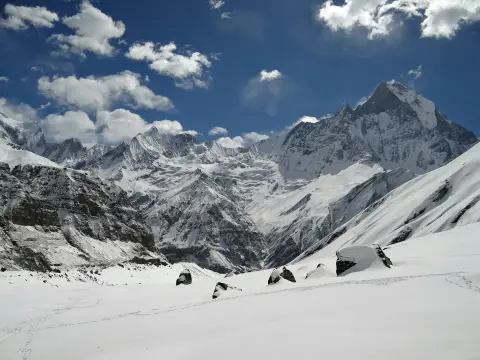
The Annapurna Circuit Trek is one of Nepal’s most iconic and diverse trekking routes, offering a combination of natural beauty, cultural immersion, and high-altitude adventure. Starting from Syange/Jagat and culminating at Muktinath, this trek takes you through lush subtropical forests, terraced farmlands, traditional villages, and high mountain deserts. Trekkers are treated to breathtaking views of the Annapurna and Dhaulagiri mountain ranges, including iconic peaks like Machapuchare and Annapurna II. The trail also crosses the famous Thorong La Pass (5,416m/17,769 ft), which is one of the highest trekking passes in the world.
Along the route, travelers experience diverse ethnic communities, including Gurungs, Magars, and Thakalis, providing insight into Nepal’s rich cultural heritage. The trek combines long walking days with gradual acclimatization, making it suitable for both moderate and experienced trekkers. Highlights include the traditional villages of Chame, Pisang, and Manang, the sacred Muktinath Temple, and the natural hot springs in Tatopani, perfect for relaxation after long trekking days.
The best seasons to trek the Annapurna Circuit are autumn (September to November) and spring (March to May). During these periods, the weather is generally stable, and the skies are clear, offering stunning mountain views. Autumn is ideal after the monsoon season when the rhododendron forests are lush, rivers are flowing, and the trails are relatively dust-free. Spring brings blooming flowers, fresh greenery, and moderate temperatures, which is perfect for photographers and nature lovers.
Winter trekking, from December to February, is less crowded but colder, especially above Manang, and heavy snow can make Thorong La Pass challenging. Summer (June to August) coincides with the monsoon season, making trails slippery and less enjoyable due to heavy rainfall. Proper timing is essential to ensure safe passage across the high-altitude passes and to enjoy the scenic beauty of the Annapurna region.
Seasonal Insights:
The Annapurna Circuit Trek is considered moderate to challenging, depending on individual fitness levels and trekking experience. While daily trekking hours range from 3 to 8 hours, the trail includes steep ascents, high-altitude terrain, and variable weather conditions. Acclimatization days, such as the one in Manang, are built into the itinerary to reduce the risk of altitude sickness, particularly before crossing Thorong La Pass.
Transportation logistics are straightforward. Trekkers start by driving from Kathmandu to Syange/Jagat, typically an 8-10 hour drive, navigating hilly roads with scenic river valleys and farmland. After completing the trek, travelers drive from Nayapul to Pokhara and then from Pokhara to Kathmandu, providing comfort and relaxation after long trekking days. Vehicles used are usually tourist vans or jeeps, ensuring safe and reliable transport for groups of various sizes.
Difficulty and Transportation Highlights:
Food and accommodation along the Annapurna Circuit Trek are designed to provide comfort despite the remote terrain. Most villages have tea houses or lodges, offering simple rooms with basic amenities, such as beds, blankets, and shared bathrooms. In higher-altitude villages like Manang or Thorong Phedi, facilities may be more basic due to limited access, but warmth and hospitality are guaranteed.
Meals along the route feature traditional Nepali cuisine, including dal bhat (lentil soup with rice), momos (dumplings), and noodles or soups. Tea, coffee, and hot chocolate are widely available to help with warmth and energy. It is recommended to carry light snacks like nuts, chocolate, and energy bars for long trekking days, particularly when crossing high passes or remote areas where food options are limited.
Food and Accommodation Insights:
To trek the Annapurna Circuit, all trekkers must obtain official permits, which are easily arranged in Kathmandu. The two essential permits are the Annapurna Conservation Area Permit (ACAP) and the Trekkers’ Information Management System (TIMS) card.
These permits are checked at multiple points along the trek, particularly at entry and exit villages. Nepal Everest Trek assists trekkers with all permit arrangements, ensuring a hassle-free experience so travelers can focus on trekking and enjoying the scenery.
Permit Highlights:
Choosing the Annapurna Circuit Trek with Nepal Everest Trek ensures an unforgettable experience combining adventure, culture, and natural beauty. This trek is perfect for those who want a well-structured itinerary with professional support, including guides, porters, and transportation arrangements. Nepal Everest Trek emphasizes safety, acclimatization, and local experiences, making the journey comfortable and enjoyable for trekkers of varying experience levels.
The Annapurna Circuit offers something for everyone: majestic mountain panoramas, rich cultural encounters, and thrilling high-altitude challenges. Unlike other treks, this route offers diverse landscapes, from subtropical forests to high Himalayan deserts. Additionally, resting days in places like Manang allow for proper acclimatization, while side attractions like the hot springs at Tatopani offer relaxation.
Reasons to Choose This Trek:
Clothing
Handwear
Footwear
Gear
Miscellaneous
The Annapurna Circuit is considered a moderate to challenging trek, requiring a good level of physical fitness. Trekkers should be able to walk 5-7 hours daily on hilly or uneven terrain. Cardiovascular endurance, leg strength, and stamina are important, but prior trekking experience is not mandatory. Nepal Everest Trek recommends regular cardio exercises, hiking practice, and strength training before the trek. Proper acclimatization is crucial at higher altitudes to prevent altitude sickness, so fitness combined with gradual ascent ensures a safe and enjoyable experience.
While prior trekking experience can be helpful, it is not mandatory for the Annapurna Circuit Trek. The route has well-established trails, teahouses, and experienced local guides provided by Nepal Everest Trek. Trekkers with limited experience can successfully complete the journey if they maintain a steady pace, follow the guide’s instructions, and allow proper time for acclimatization. Basic trekking skills, such as using trekking poles, walking on uneven terrain, and carrying a backpack comfortably, are sufficient to enjoy this remarkable Himalayan adventure.
The highest point on the Annapurna Circuit Trek is the Thorong La Pass, standing at 5,416 meters (17,769 feet) above sea level. Crossing this pass is a highlight of the trek, offering breathtaking panoramic views of the Annapurna and Dhaulagiri ranges. Nepal Everest Trek ensures trekkers acclimatize properly in villages like Manang and Yak Kharka before attempting the pass. The early morning ascent allows for better weather conditions and safer passage. Trekking poles, warm clothing, and steady pacing are essential for crossing Thorong La safely.
Altitude sickness is a potential concern on the Annapurna Circuit due to the high elevations, especially near Thorong La Pass. Symptoms can include headache, nausea, dizziness, and fatigue. Nepal Everest Trek emphasizes gradual ascent, rest days for acclimatization, and proper hydration to minimize risk. Guides are trained to monitor symptoms and provide advice, and emergency evacuation procedures are in place if needed. Trekking at a steady pace, avoiding alcohol, and listening to your body are crucial. Most trekkers acclimatize well and enjoy a safe and rewarding experience in the high Himalayas.
The best time to undertake the Annapurna Circuit Trek is during the pre-monsoon (spring: March to May) and post-monsoon (autumn: September to November) seasons. During these months, the weather is generally stable, the skies are clear, and visibility of the Himalayan peaks is excellent. Spring brings colorful rhododendron blooms, while autumn offers crisp, sunny days and comfortable trekking conditions. Nepal Everest Trek advises avoiding the monsoon season (June to August) due to heavy rainfall, slippery trails, and landslides, which can make trekking dangerous.
Accommodation on the Annapurna Circuit consists mainly of teahouses and lodges. These provide basic amenities such as a bed, blanket, and meals. Some teahouses offer private rooms, while others provide shared dormitories. Nepal Everest Trek carefully selects teahouses with good hygiene and warm hospitality to ensure trekkers’ comfort. In higher-altitude villages, facilities are more basic, with limited electricity and hot water. Despite simplicity, staying in teahouses offers an authentic experience of local culture and community life, making the trek more immersive and memorable.
Meals on the Annapurna Circuit are generally served in teahouses and include local Nepali dishes such as dal bhat (rice and lentil soup), noodles, soups, and Tibetan-style momos (dumplings). Western meals like pasta, pancakes, and omelets are also available in many lodges. Nepal Everest Trek ensures that trekkers have access to nutritious meals to maintain energy levels during long trekking days. Drinking water should be boiled or filtered, and snacks such as nuts or energy bars are recommended for the trail. Food options improve at lower altitudes and vary depending on village remoteness.
Yes, the Annapurna Circuit is generally safe, especially when trekking with a reputable company like Nepal Everest Trek. Risks such as altitude sickness, sudden weather changes, and uneven trails exist but can be minimized with proper acclimatization, careful planning, and guidance from experienced local guides. Trekkers are encouraged to stay hydrated, maintain a moderate pace, and avoid strenuous activity during acclimatization days. Emergency evacuation plans and communication support are also available for additional safety, ensuring a secure and enjoyable trekking experience.
Yes, Nepal Everest Trek strongly recommends hiring a licensed guide or porter, particularly for those with limited trekking experience. Guides provide expertise in route navigation, local culture, and safety procedures, while porters can carry heavy backpacks, reducing fatigue. Hiring a guide or porter enhances the trekking experience, allowing trekkers to focus on enjoying the scenery. Nepal Everest Trek ensures that all staff are experienced, well-trained, and fairly compensated, supporting local employment and sustainable tourism while providing a safe and comfortable journey for clients.
Trekkers need the Annapurna Conservation Area Permit (ACAP) and the Trekkers’ Information Management System (TIMS) card to enter the Annapurna region. ACAP ensures conservation of the national park and its wildlife, while TIMS tracks trekkers for safety purposes. Nepal Everest Trek assists in obtaining these permits before or upon arrival in Kathmandu. Carrying these permits throughout the trek is mandatory, as checkpoints along the trail will verify them. Proper permits ensure compliance with local regulations and contribute to environmental protection and sustainable tourism in the Annapurna region.
Packing for the Annapurna Circuit Trek requires careful consideration of weather, altitude, and duration. Essential items include layered clothing for varying temperatures, a warm jacket, trekking boots, gloves, a hat, sleeping bag, water bottles, and personal hygiene items. Trekking poles, sunscreen, sunglasses, and a first-aid kit are highly recommended. Nepal Everest Trek provides detailed packing lists and guidance to ensure trekkers carry everything needed without overpacking. Proper preparation helps maintain comfort, safety, and energy throughout the trek, especially at higher elevations where weather conditions can change rapidly.
| No of people | Price per person |
|---|---|
| 1 - 1 | $1,165 |
| 2 - 4 | $1,055 |
| 5 - 9 | $1,040 |
| 10 - 15 | $1,025 |