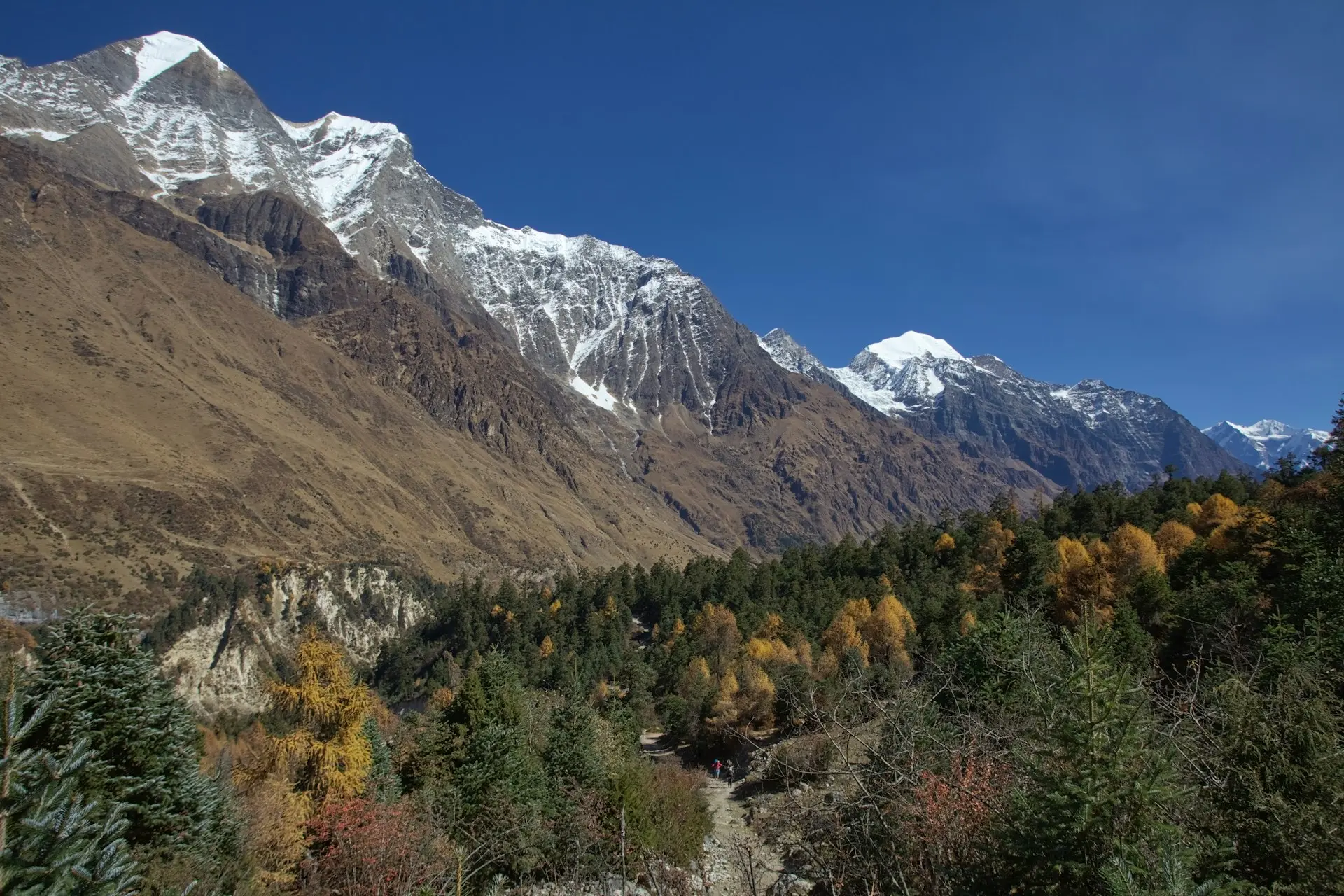
The Manaslu Tsum Valley Trek, offered by Nepal Everest Trek, is one of Nepal’s hidden gems, combining spiritual immersion, cultural discovery, and breathtaking Himalayan landscapes. This trek takes you through the remote Tsum Valley, a sacred Buddhist region that has preserved its ancient traditions and unique Tibetan-influenced culture. Located in the north-central part of Nepal, this area lies near the majestic Manaslu (8,163m), the world’s eighth-highest peak. Trekkers experience lush forests, traditional villages, suspension bridges, and pristine rivers while trekking through the lower to higher altitudes.
The trek typically spans 18–19 days, starting from Kathmandu and moving through Machha Khola, Jagat, Lokpa, Chumling, and Rachen Gompa, eventually reaching Samagaon, the gateway to the Tsum Valley. An acclimatization day at Samagaon allows trekkers to explore Birendra Lake, Pungen Monastery, or even Manaslu Base Camp. The route continues to Samdo, Larkya Phedi, and crosses the famous Larkya La Pass (5160m) before descending to Bimthang and Dharapani, finishing with a drive back to Kathmandu. This trek is a perfect blend of adventure, natural beauty, and spiritual enrichment, making it ideal for travelers who want an off-the-beaten-path Himalayan experience.
The Manaslu Tsum Valley Trek is best undertaken during the pre-monsoon (spring) and post-monsoon (autumn) seasons. In spring (March to May), the valleys and hillsides are covered with rhododendron blooms, offering colorful scenery and pleasant weather for trekking. Snow on higher elevations makes the peaks stunningly photogenic, and temperatures are moderate for daytime trekking. This is an excellent time for photographers and nature enthusiasts.
In autumn (September to November), after the monsoon, the skies are clear, providing spectacular views of the snow-capped Himalayan peaks. The trails are less muddy, and the weather remains stable, reducing the risk of landslides or road blockages. Winter trekking (December–February) is also possible but challenging due to heavy snow, especially at Larkya La Pass, and fewer lodges being operational in the remote regions. Summer (June–August) is generally not recommended due to monsoon rains, leeches, and slippery trails.
Best Seasons Summary:
The Manaslu Tsum Valley Trek is considered moderate to challenging, suitable for trekkers with prior trekking experience. While the lower regions involve relatively gentle trails through villages and forests, higher altitude segments, such as the Larkya La Pass at 5160m, require stamina, acclimatization, and careful preparation. Daily walking distances range from 4–7 hours, with some days stretching longer during steep ascents or descents. Proper trekking gear, hydration, and acclimatization days are essential to minimize the risk of altitude sickness.
Transportation to the starting point is relatively straightforward. Most treks begin with a drive from Kathmandu to Arughat or Soti Khola, followed by the trek through Machha Khola, which is accessible via jeep or local bus. The return journey usually involves a jeep or bus ride from Dharapani to Kathmandu, passing through scenic rural landscapes. Nepal Everest Trek ensures organized transportation, reliable local drivers, and comfortable transfers, making logistics easy and stress-free for trekkers.
Difficulty & Transportation Highlights:
During the Manaslu Tsum Valley Trek, accommodation is a combination of tea houses, lodges, and guesthouses. In lower regions like Jagat, Lokpa, and Chumling, basic facilities with warm beds, shared bathrooms, and home-cooked meals are available. As you ascend, especially above Samagaon and Samdo, lodges may be more rustic due to remote access. Nepal Everest Trek ensures trekkers stay in reliable and hygienic accommodations, providing comfort and safety in isolated areas.
Food along the trek includes traditional Nepali dishes, Tibetan-inspired meals, and continental options in larger lodges. Common meals include dal bhat (rice and lentils), momo (dumplings), noodle soups, and potatoes, which are both nutritious and energy-boosting for trekkers. Tea, coffee, and hot drinks are widely available, crucial for warming up during high-altitude days. Vegetarians and trekkers with dietary restrictions are generally accommodated with advance notice to the company.
Food & Accommodation Summary:
Trekking in the Manaslu region requires specific permits due to its status as a restricted area. Nepal Everest Trek helps trekkers obtain the necessary documents, which include:
These permits ensure responsible tourism, preservation of the environment, and respect for local traditions. Fees vary based on nationality and trekking duration. With permits in hand, trekkers can enjoy peace of mind, legal access, and the chance to experience the region’s natural and cultural heritage safely. Nepal Everest Trek takes care of all paperwork in advance, ensuring a smooth and hassle-free trek experience.
Permit Summary:
Choosing the Manaslu Tsum Valley Trek with Nepal Everest Trek is perfect for trekkers seeking off-the-beaten-path adventure, cultural immersion, and spiritual experience. Unlike the crowded trekking routes in Annapurna or Everest regions, this trek provides solitude, serenity, and authentic encounters with traditional Tibetan Buddhist communities. The untouched landscapes, high-altitude passes, and sacred monasteries offer a unique blend of adventure and cultural learning.
Nepal Everest Trek is a trusted trekking company known for experienced guides, quality service, and personalized attention. They manage all logistics, including permits, transportation, accommodation, and meals, allowing trekkers to focus entirely on the journey. Safety is a priority, with acclimatization days, expert advice on altitude sickness, and professional support along the route. This trek is ideal for those who want to combine adventure, photography, nature, and spiritual exploration in a single Himalayan journey.
Why Choose Manaslu Tsum Valley Trek:
Clothing
Handwear
Footwear
Gear
Miscellaneous
While prior trekking experience is helpful, it is not mandatory. The trek is challenging but can be completed by moderately fit individuals with proper preparation. Nepal Everest Trek provides experienced guides and porters to assist trekkers, ensuring safety, navigation, and cultural immersion. Proper acclimatization and pacing are essential, especially for high-altitude sections. Beginners are encouraged to engage in pre-trek training, including long walks, stair climbing, and endurance exercises, to make the journey enjoyable and safe.
The trek is considered moderate to challenging due to long daily walks, high altitudes, and rugged terrain. Trekkers should be physically fit and accustomed to walking for 5–8 hours per day. Some days involve steep ascents and high passes, such as Larkya La at 5160 meters. Nepal Everest Trek advises preparing with cardiovascular exercises, leg strengthening, and regular walking prior to the trek. The trek is suitable for experienced and adventurous beginners who are ready for acclimatization and guided support.
Yes, altitude sickness is a concern because the trek reaches elevations above 5000 meters at Larkya La Pass. Symptoms can include headache, nausea, dizziness, and fatigue. Nepal Everest Trek emphasizes proper acclimatization, gradual ascent, and hydration to reduce the risk. Guides are trained to recognize early signs of altitude sickness and can adjust the trekking pace or suggest rest days if necessary. Following advice, avoiding alcohol, and taking short breaks can help ensure a safe and enjoyable experience at high altitudes.
A moderate level of physical fitness is recommended. Trekkers should be comfortable walking 5–8 hours daily on uneven terrain and steep ascents. Endurance, leg strength, and cardiovascular fitness are important for tackling high passes like Larkya La. Nepal Everest Trek suggests training by hiking with a loaded backpack, walking or jogging regularly, and performing exercises for legs and core muscles. Being fit improves trekking comfort, reduces fatigue, and enhances the overall experience while allowing you to enjoy breathtaking scenery along the route.
A typical package includes airport transfers, accommodation in Kathmandu and along the trek, meals as specified, certified guides and porters, trekking permits, TIMS cards, and transportation to the trailhead. Nepal Everest Trek also provides pre-trek briefings, emergency support, and detailed itinerary planning. Optional services like private porters or cultural tours in Kathmandu can be added. The package ensures a hassle-free and safe trekking experience, combining adventure, comfort, and cultural immersion while letting trekkers focus on enjoying the majestic Manaslu Tsum Valley landscapes.
Yes, trekkers need specific permits to enter the Manaslu region. These include the Manaslu Restricted Area Permit (RAC) and a Tsum Valley Permit. Additionally, a TIMS card (Trekkers’ Information Management System) is required for trekking in Nepal. These permits ensure controlled tourism, preservation of local culture, and environmental protection. Nepal Everest Trek assists trekkers with obtaining all necessary permits before the journey, ensuring a smooth start without delays, and also provides guidance on the documents and passport copies required for processing.
The ideal time for the Manaslu Tsum Valley Trek is during the pre-monsoon (March to May) and post-monsoon (September to November) seasons. During these periods, the weather is stable, skies are clear, and mountain views are spectacular. Spring offers colorful rhododendron blooms, while autumn provides golden landscapes and crisp mountain vistas. Nepal Everest Trek recommends avoiding the monsoon months (June to August) due to heavy rainfall, slippery trails, and increased risk of landslides, while winter can be very cold with snow at higher elevations.
Accommodation along the Manaslu Tsum Valley Trek is mostly in local tea houses and lodges. These are simple yet comfortable, offering basic amenities like beds, blankets, and shared bathrooms. Hot showers may not be available at all locations, particularly at higher elevations. Nepal Everest Trek ensures that trekkers stay in clean and safe lodges, often family-run, providing authentic cultural experiences. Staying in these accommodations allows trekkers to interact with locals, experience traditional meals, and enjoy the serene Himalayan environment.
Meals during the trek are mostly local Nepali or Tibetan-style dishes, including rice, lentil soup, noodles, potatoes, and momo (dumplings). Breakfast typically consists of porridge, eggs, or toast, while lunch and dinner offer hot, nutritious meals. Nepal Everest Trek ensures that all meals are prepared hygienically and provides vegetarian or other dietary options if requested in advance. Drinking water should be treated or boiled, and tea, coffee, and soft drinks are available at tea houses along the route.
The Manaslu region is a restricted area, so trekkers are required to hire a registered guide and, optionally, a porter. Independent trekking is not permitted. Nepal Everest Trek provides experienced, certified guides who are knowledgeable about local culture, language, and terrain, ensuring safety and smooth logistics. Guides also assist with permits, accommodations, and route navigation. Hiring a guide enhances the trekking experience, provides cultural insights, and ensures you can focus on enjoying the stunning landscapes without worrying about administrative challenges.
Yes, travel insurance is highly recommended, and some permits may require proof of insurance covering high-altitude trekking and emergency evacuation. Nepal Everest Trek advises choosing policies that include helicopter evacuation, medical emergencies, and trip cancellation. Accidents or illnesses in remote areas can be expensive without insurance, so securing coverage before the trek is crucial. Having reliable insurance ensures peace of mind, allowing trekkers to focus on the experience and adventure in the Manaslu Tsum Valley safely and confidently.
Packing the right gear is essential for comfort and safety. Essentials include layered clothing for varying temperatures, a warm sleeping bag, trekking boots, rain gear, gloves, hats, sunscreen, water purification tablets, and a personal first-aid kit. Nepal Everest Trek provides a detailed packing list tailored for the trek, including tips for high-altitude trekking. Proper clothing and gear protect against cold, wind, and rain, and ensure an enjoyable journey through diverse landscapes, from subtropical forests to snow-capped mountains.
| No of people | Price per person |
|---|---|
| 1 - 1 | $1,565 |
| 2 - 4 | $1,395 |
| 5 - 9 | $1,380 |
| 10 - 15 | $1,365 |